
ERGOQUEST ZERO GRAVITY RADIOLOGY WORKSTATIONS

The main objective is to help radiologists—especially trainees—minimize fatigue and improve comfort and efficiency during image interpretation by providing flexible positioning options and expanded visual access.
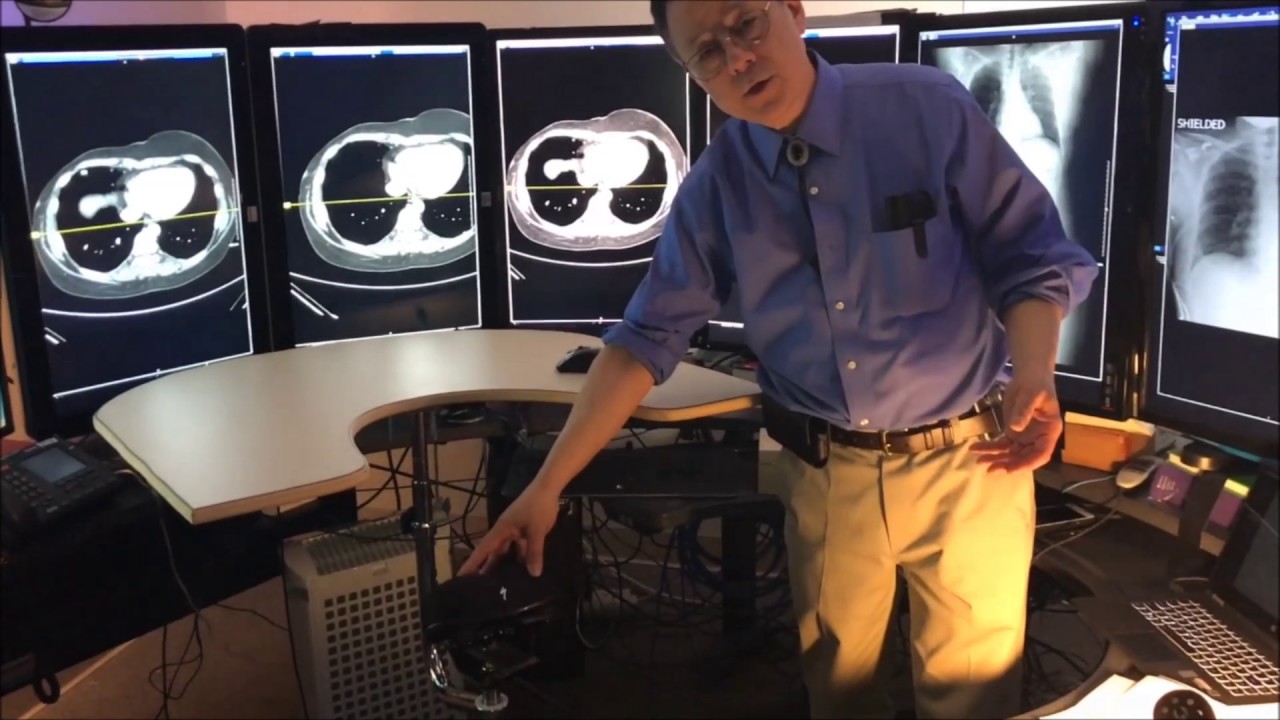
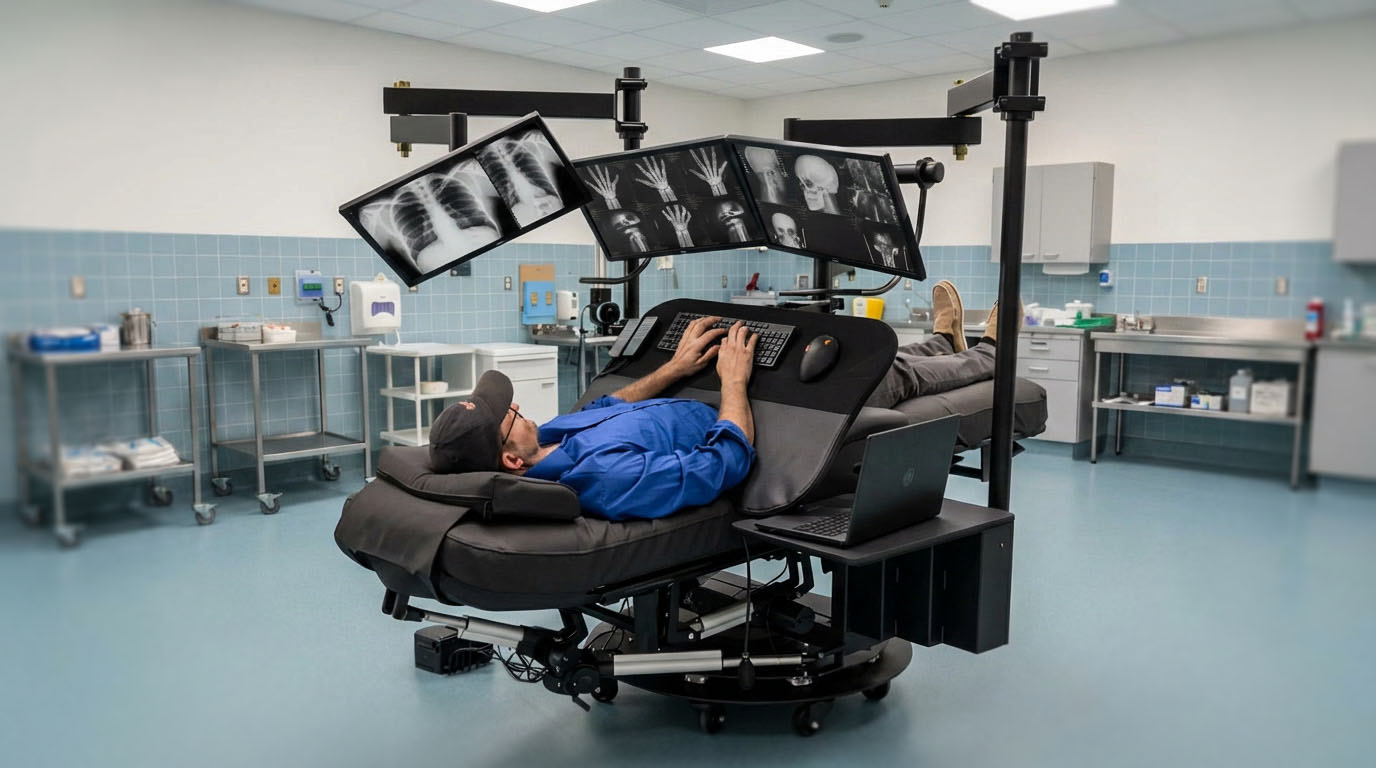
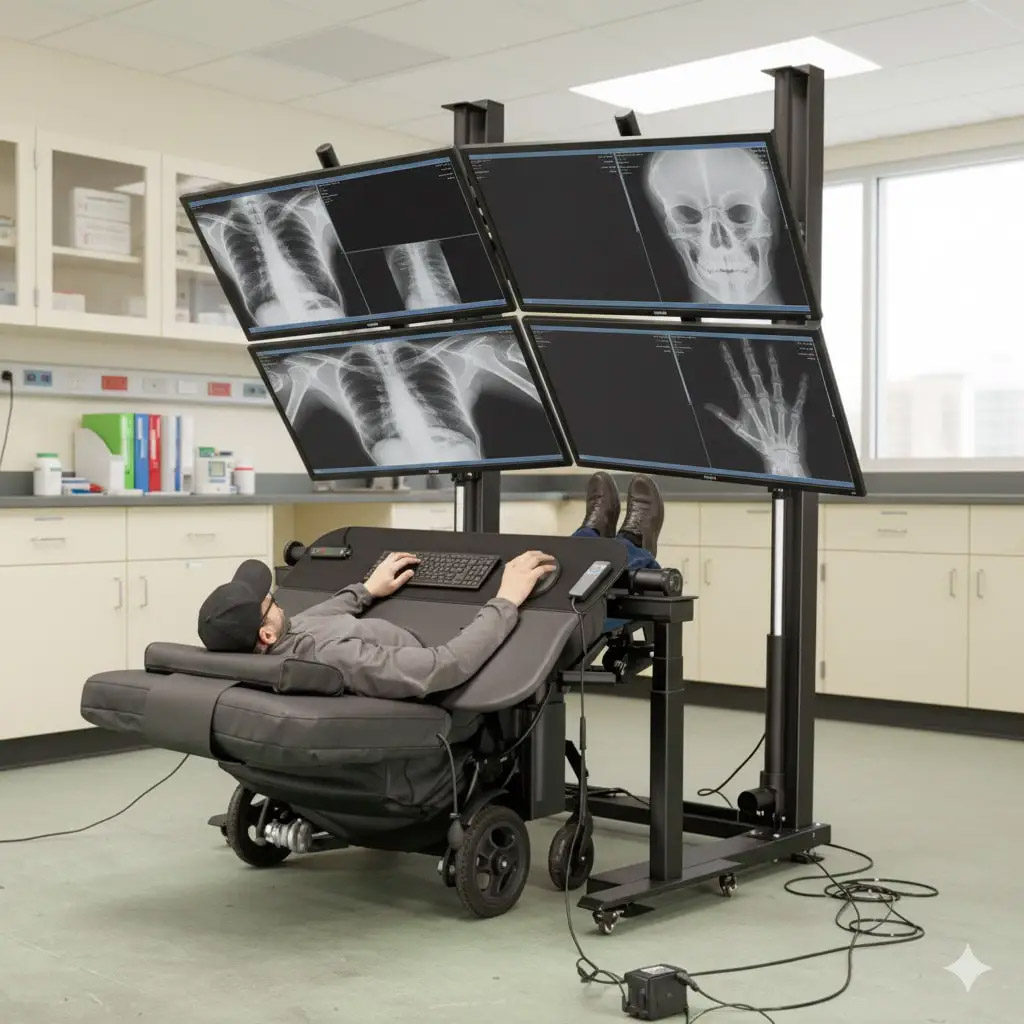
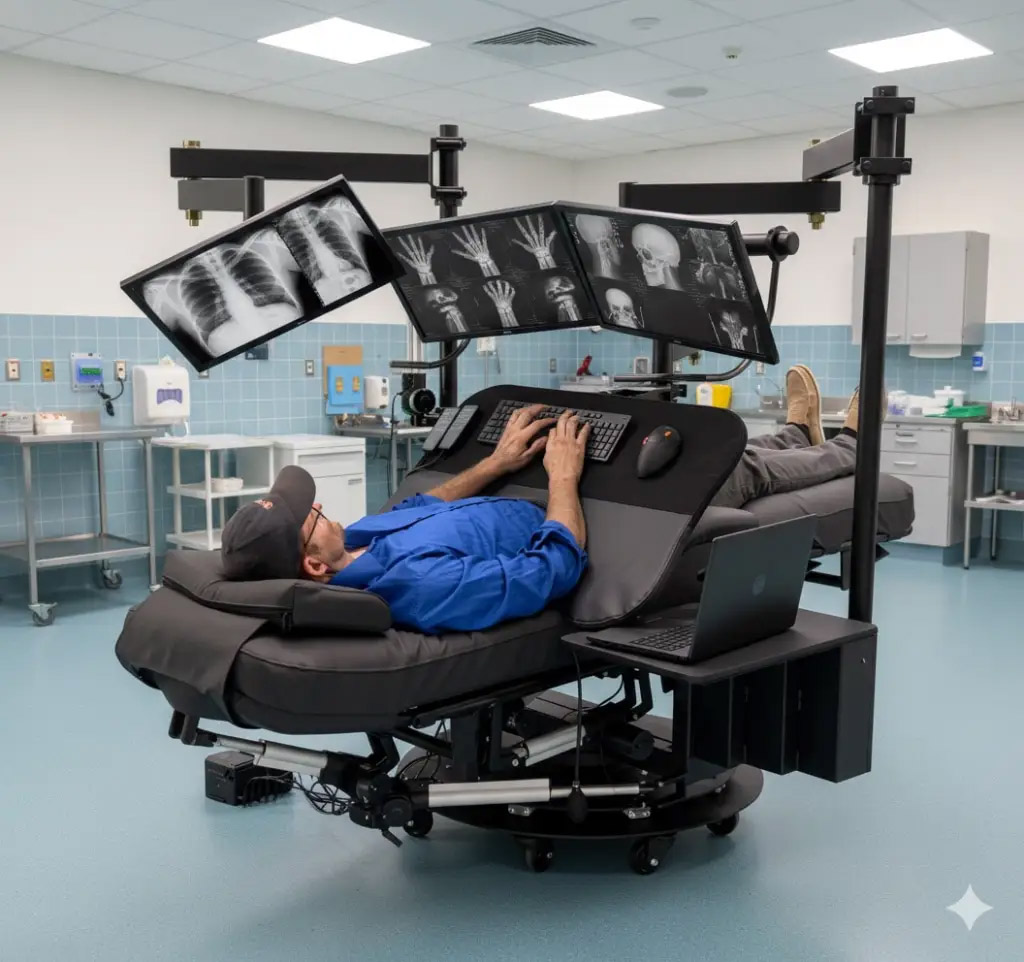
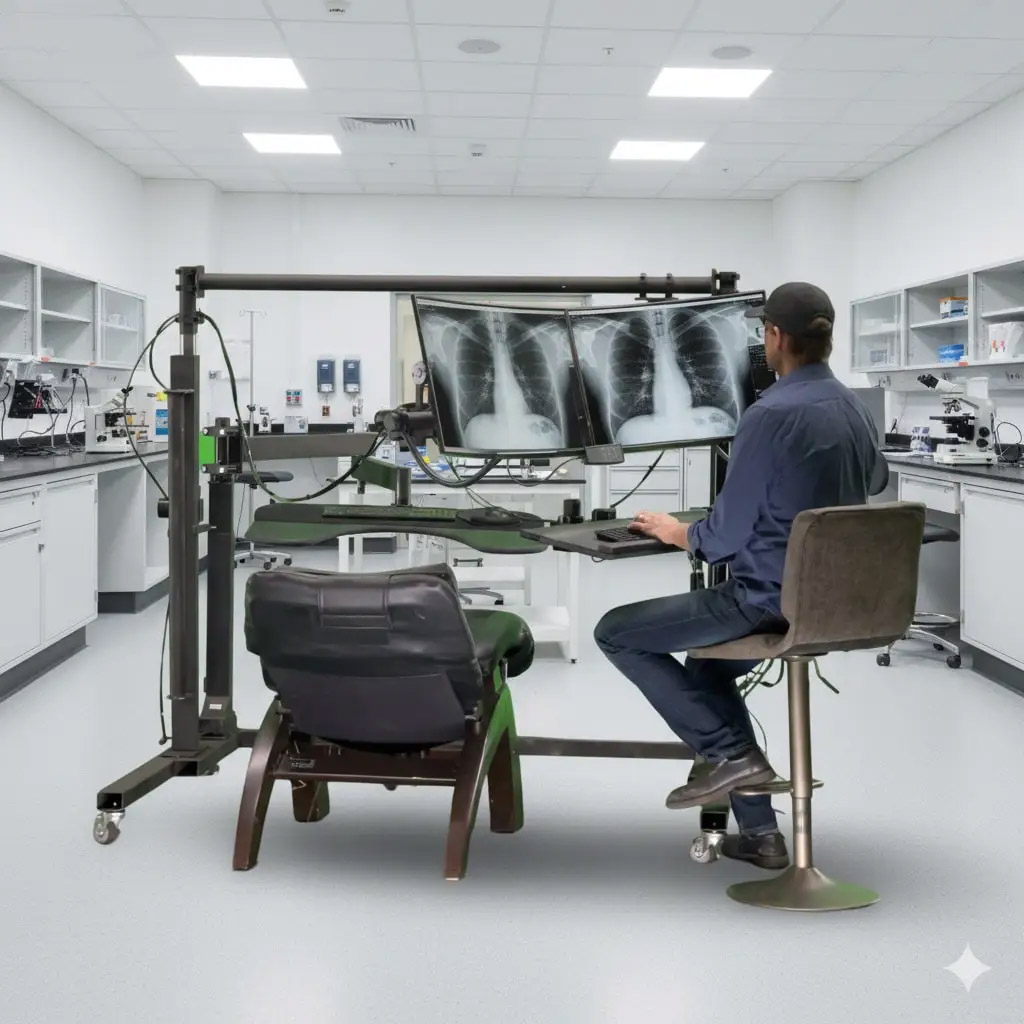
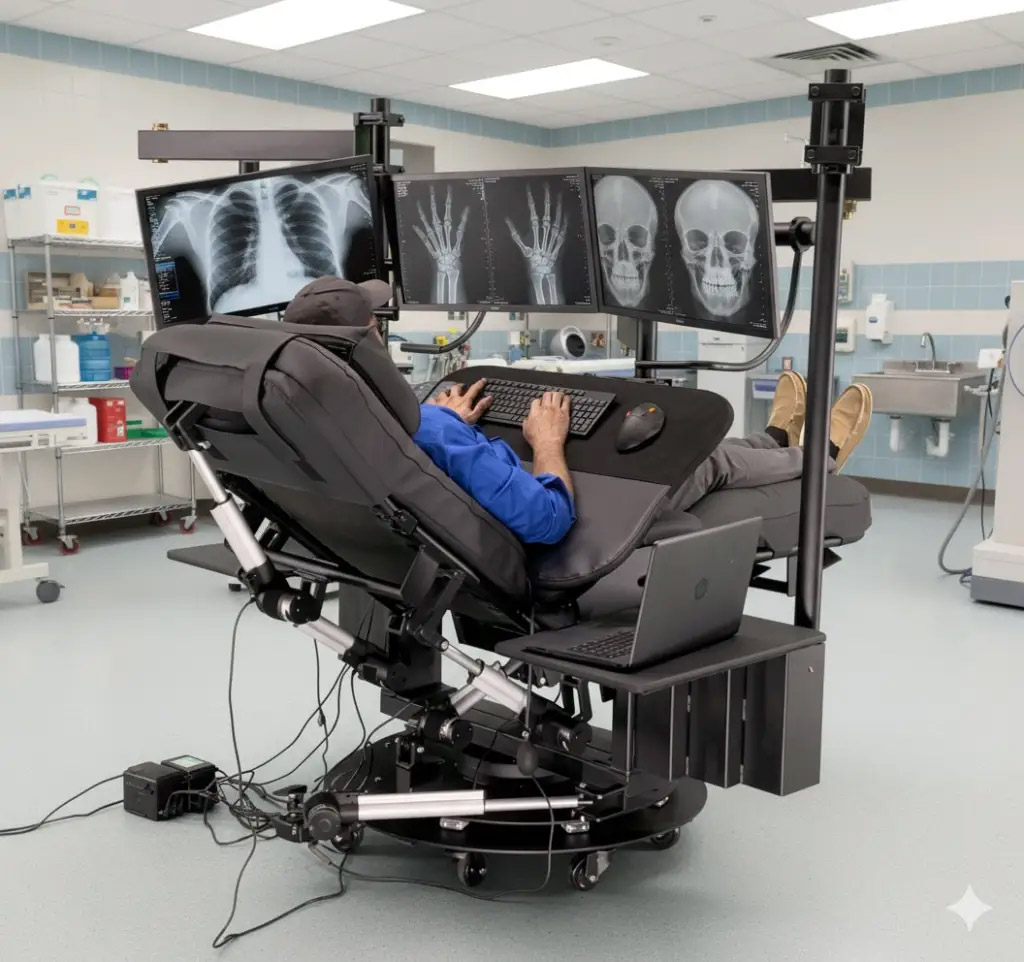
Rotational cockpit designs allow users to transition smoothly between sitting, standing, and perching positions. Both the desk and chair rotate together, supporting various working postures. An extended visual array increases display space so users can view more images and information at once while reducing physical stress. In-service workshops will teach radiologists how to use these movement options by navigating three distinct “visual sweet spots” within the expanded array, optimizing both comfort and image analysis.
The project will develop four prototype stations for clinical testing with feedback from residents. Radiology team members will receive hands-on training in movement strategies as they experiment with different workstation configurations. These prototypes are designed for easy transitions between postures so each user can find their optimal zones of comfort and visibility.
As an iterative research initiative, the station design will be refined continuously based on user experiences, clinical scenarios, and individual preferences. The study aims to identify which factors—such as rotational capability, display size, posture flexibility, or screen orientation—most effectively enhance comfort, efficiency, and performance across various clinical tasks.
Through collaborative experimentation and ongoing feedback collection during workshops, this project seeks to advance ergonomic workstation design in radiology settings. It aims to establish best practices for reducing strain while maximizing viewing flexibility. By involving residents early in ergonomic research efforts, the project supports healthier work habits that benefit both immediate productivity in clinical practice and long-term professional well-being.
Photos
Videos